Trapped Water
Wet Insulation Under Old Panels
- You See
- Soft spots and musty smells near ceiling stains.
- What It Means
- Foam sealed over wet material holds that water in. Wet areas are cut out and dried before any foam is sprayed.

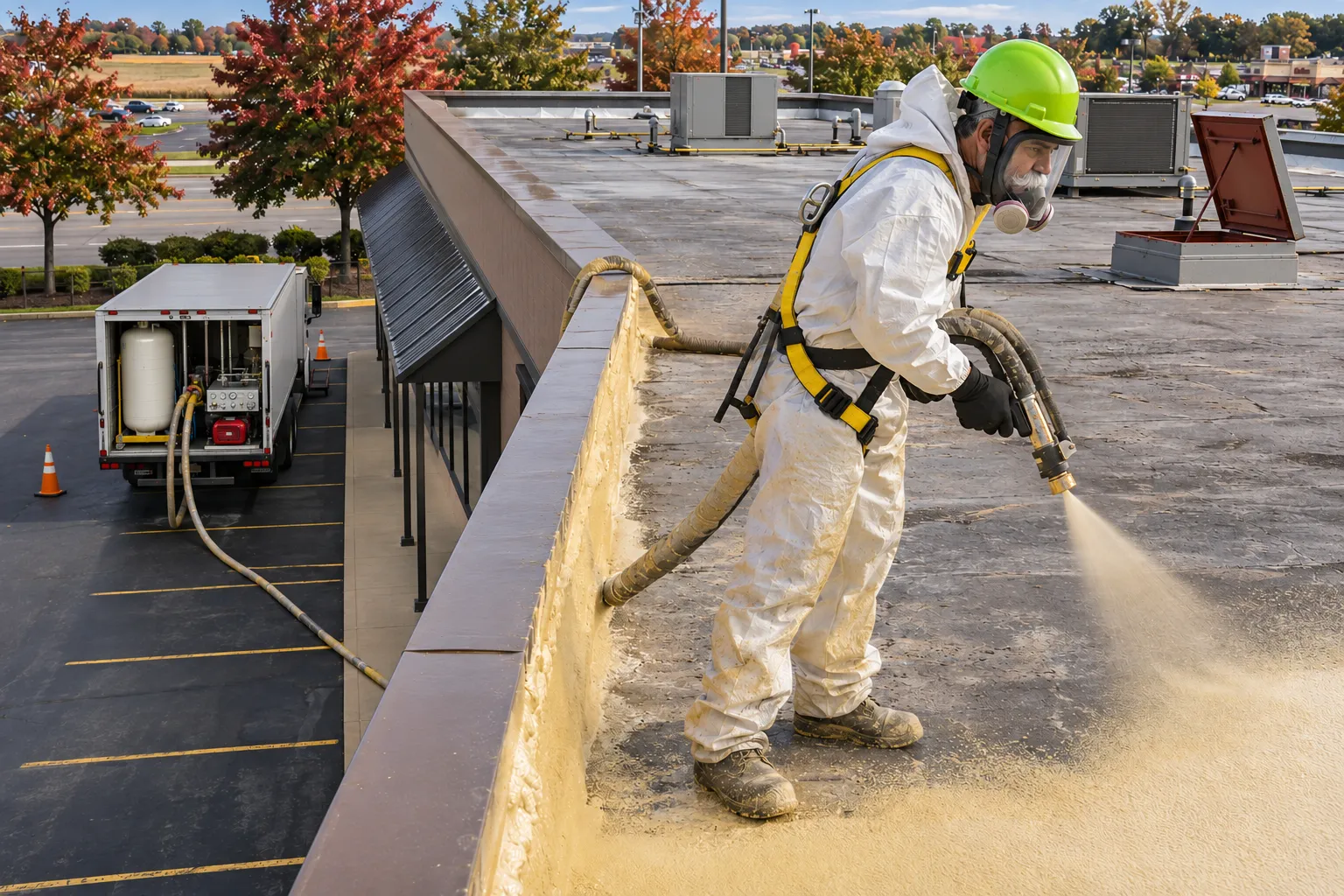
As a Merrillville spray foam roofing contractor, we repair and dry the roof, spray a continuous foam layer, and protect it with a UV-resistant coating.
Merrillville spray foam roofing works on roofs that are dry and firm underneath. These five checks come before any foam goes down.
| Roof Detail | Ready For Foam | Fix Or Rethink |
|---|---|---|
| Deck | Firm steel or concrete deck | Rotted or sagging sections |
| Moisture | Dry insulation and substrate | Wet insulation left in place |
| Existing Roof | Metal panels or a firm built-up roof | Loose gravel or a blistered membrane |
| Rooftop Air Intakes | Units that can pause for spraying | Intakes that must run nonstop |
| Drainage | Low spots to build up with foam | Drains that need relocating |
Foam bonds to whatever it is sprayed on, so these four conditions are dealt with first.
Trapped Water
Corrosion
Overspray Risk
Snow
Foam work comes in three forms, set by what is on the roof today.
Leaking screw-down steel gets foam sprayed right over the ribs, then a coating, with the panels left in place.
Firm, dry built-up or modified roofs can take foam on top once loose gravel and blisters are removed.
Areas that pond get extra foam thickness to build slope toward the drains before the topcoat.
Silicone topcoat detailsThe roof before foam, and the same roof once foam and coating are on.
Ice at the drains often means heat is escaping through the roof. Tell us what you see from inside and out, and the roof walk checks the deck and insulation.
Foam is sprayed in stages, with weather and wind checked at each one.
The deck, insulation, panels, and drains get checked, and moisture readings mark any wet areas. Intakes and nearby parking are noted for overspray control.
Wet insulation comes out, rusted-through steel is replaced, and failed curbs are rebuilt so foam goes over a firm, dry surface.
Rooftop units are shut down and covered, and edges near parked cars get screens. Spraying waits for calm air.
Foam goes on in passes until it reaches the planned thickness, with extra build-up in low spots to push water toward the drains.
A protective coating goes over the foam soon after spraying, at the thickness the system calls for, with granules added where people walk.
Other parts of the building can suit a different system.
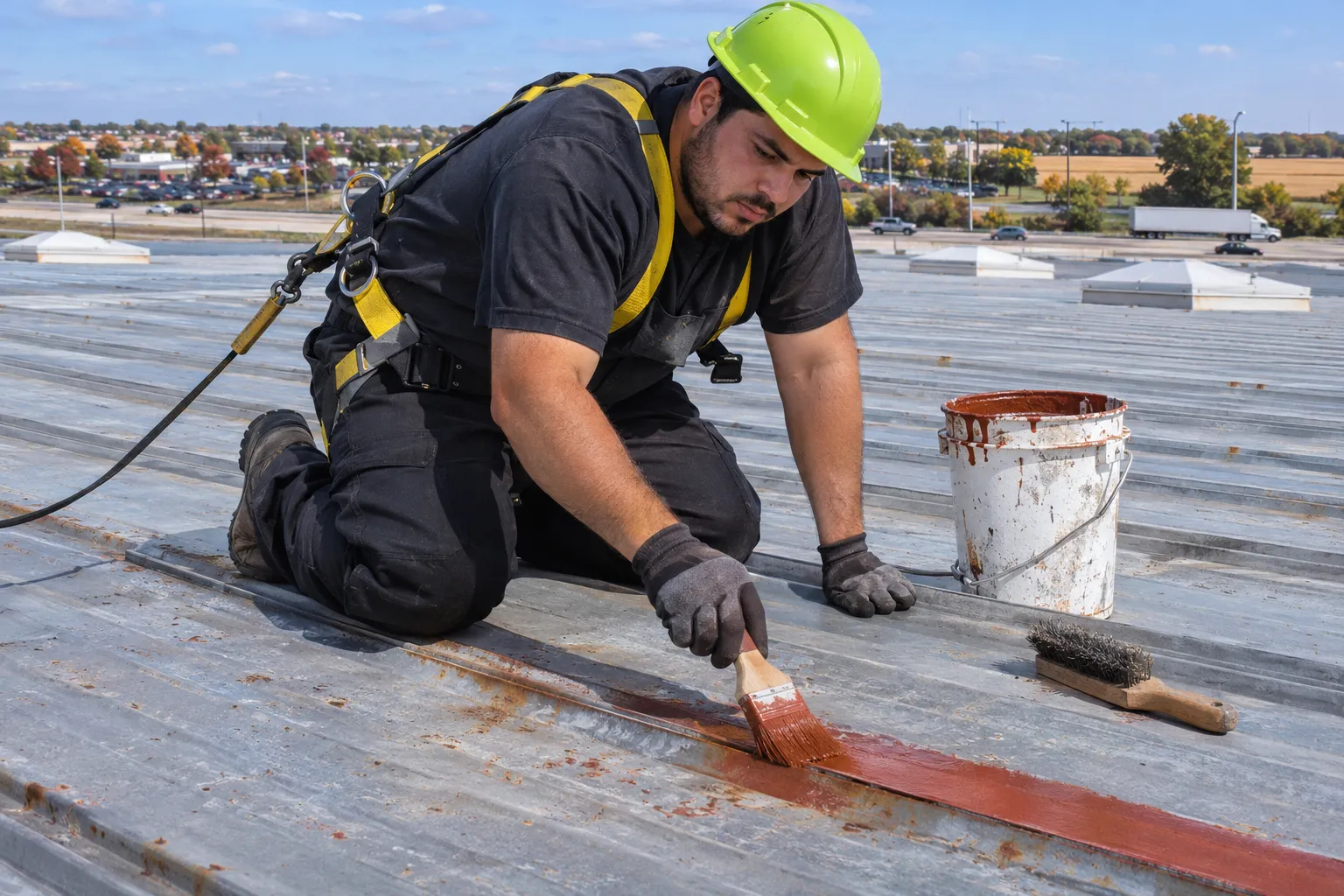
Steel sections in fair shape can skip foam and take rust and fastener work plus a coating.
Commercial Metal Roof Coating in Merrillville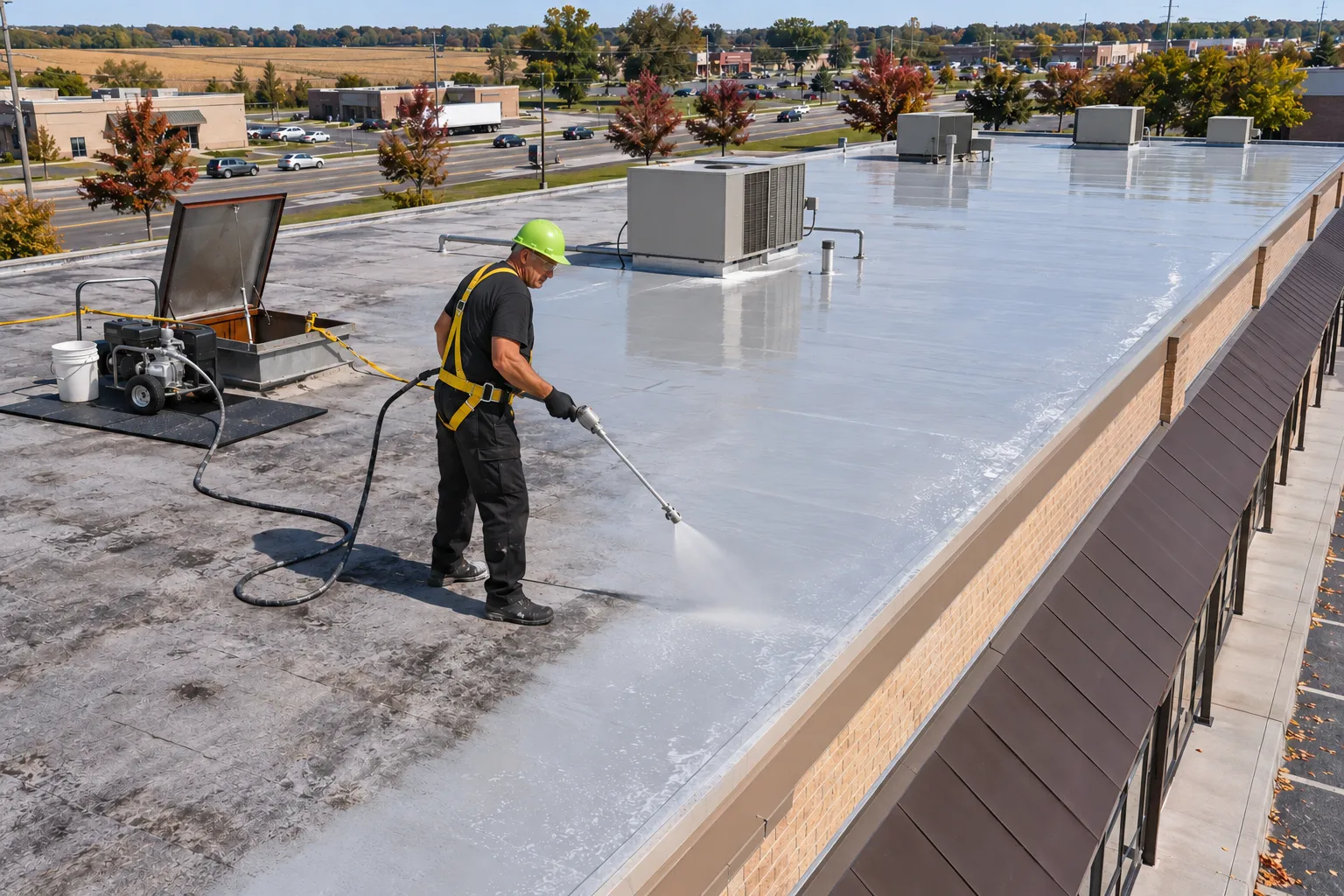
Silicone often goes on as the topcoat over foam and also stands alone on low-slope sections.
Silicone Roof Coating in Merrillville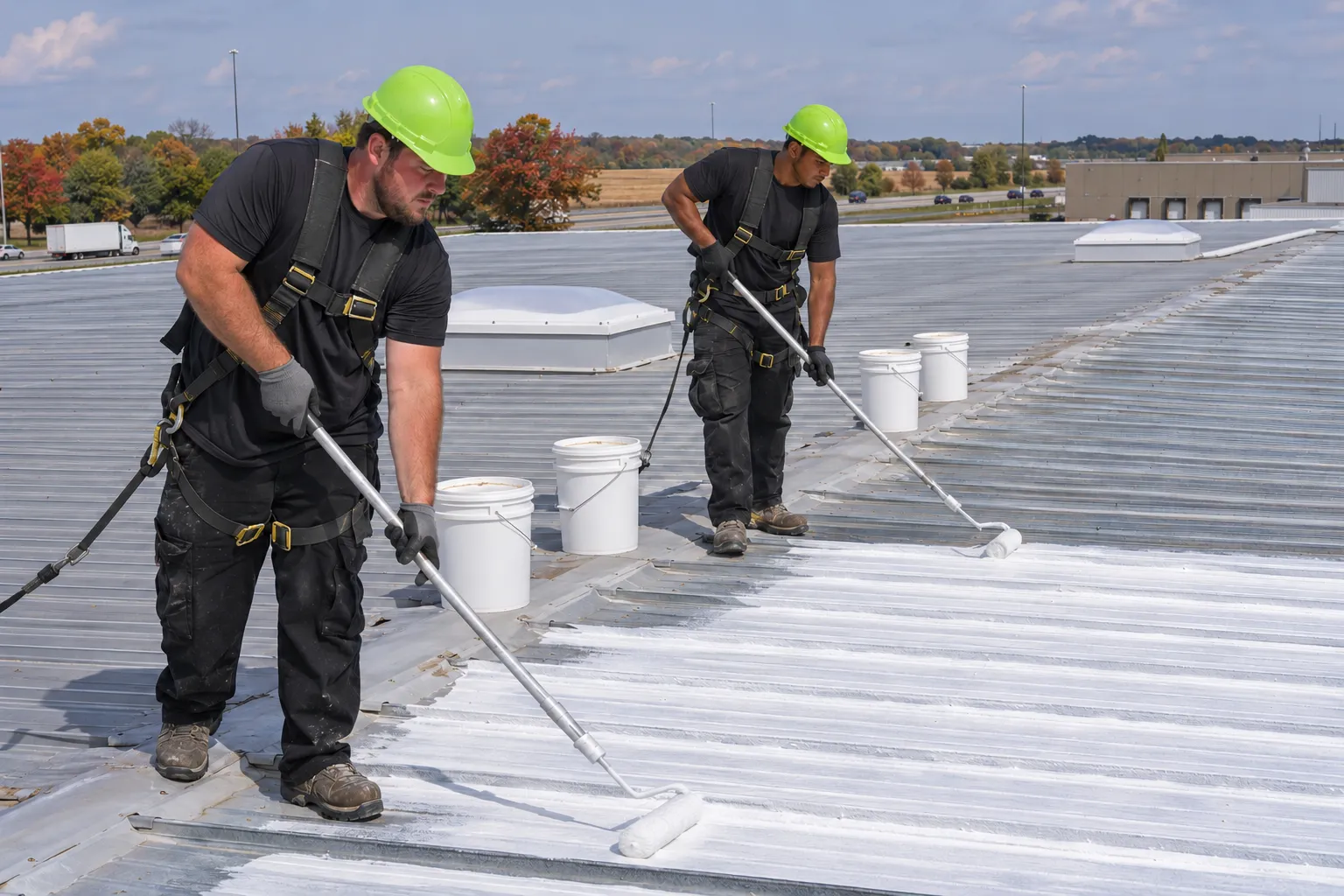
Sloped panels that only need protection, with insulation already in place, fit acrylic.
Acrylic Roof Coating in Merrillville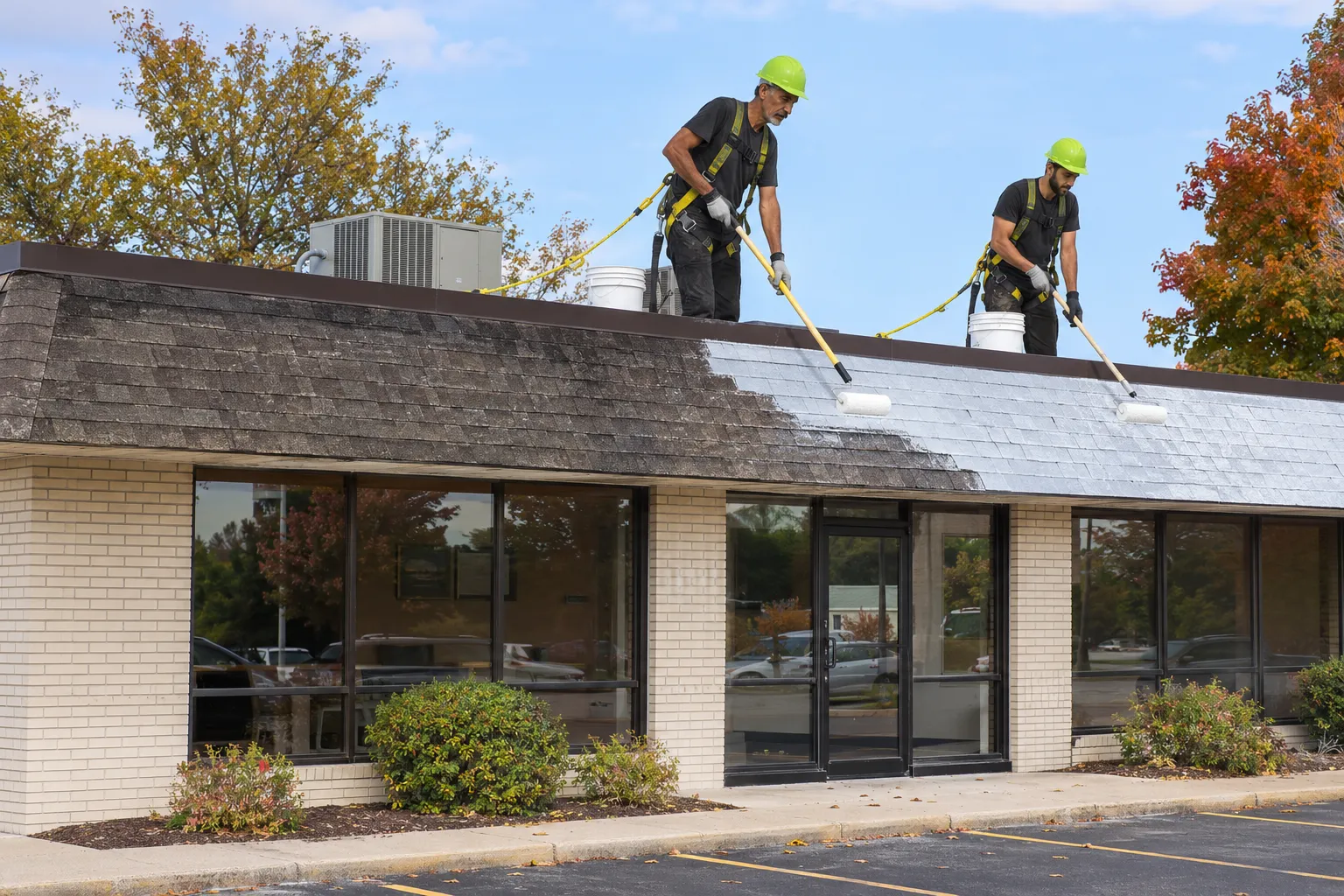
Shingled portions of the same building take a coating rated for asphalt roofs.
Shingle Roof Coating in MerrillvilleWinter insulation, leaks, service life, cost, hail, and foot traffic on foam roofs.
Yes. Foam lays a continuous insulating layer over the deck with no breaks at screws or seams, which slows heat loss through the roof and seals air leaks there too. With less heat escaping, less snow melts from below and refreezes at the edges and drains.
Foam covers screws, seams, and laps in one unbroken layer, which closes most metal roof leaks. Rusted-through panels, failed curbs, broken flashing, and wet insulation are repaired before spraying. A protective coating then goes over the foam, since sunlight breaks down a bare foam surface.
Decades, when the protective topcoat is kept up and renewed on schedule. The foam underneath holds up well; it is the coating that wears. Foam thickness, coating thickness, hail, and how quickly damage gets patched decide how long yours goes.
Foam pricing comes after the inspection and is weighed against the published ranges of about $2.50 to $4.00 per square foot for coating and about $5 to $8 per square foot for replacement. Foam thickness, the topcoat, metal prep, roof size, and access set the figure.
Hail can dent or break the protective coating and expose the foam beneath. Dents are mostly cosmetic, but breaks let water and sunlight in. After a storm we check the surface, cut out damaged foam, refill it, and recoat those spots.
Coated foam handles normal service foot traffic. Walkway pads or granules embedded in the topcoat along the routes to rooftop units spread the load and keep the coating from wearing through where techs walk most.
Describe the leaks and the ice, or get a ballpark range for coating next to replacement.