Heat
Fastener Holes Wallowed Out
- You See
- Screws that spin freely or sit crooked in the panel.
- What It Means
- Years of panel movement widen each hole. An oversized screw with a new washer bites fresh metal and closes the path water was following.

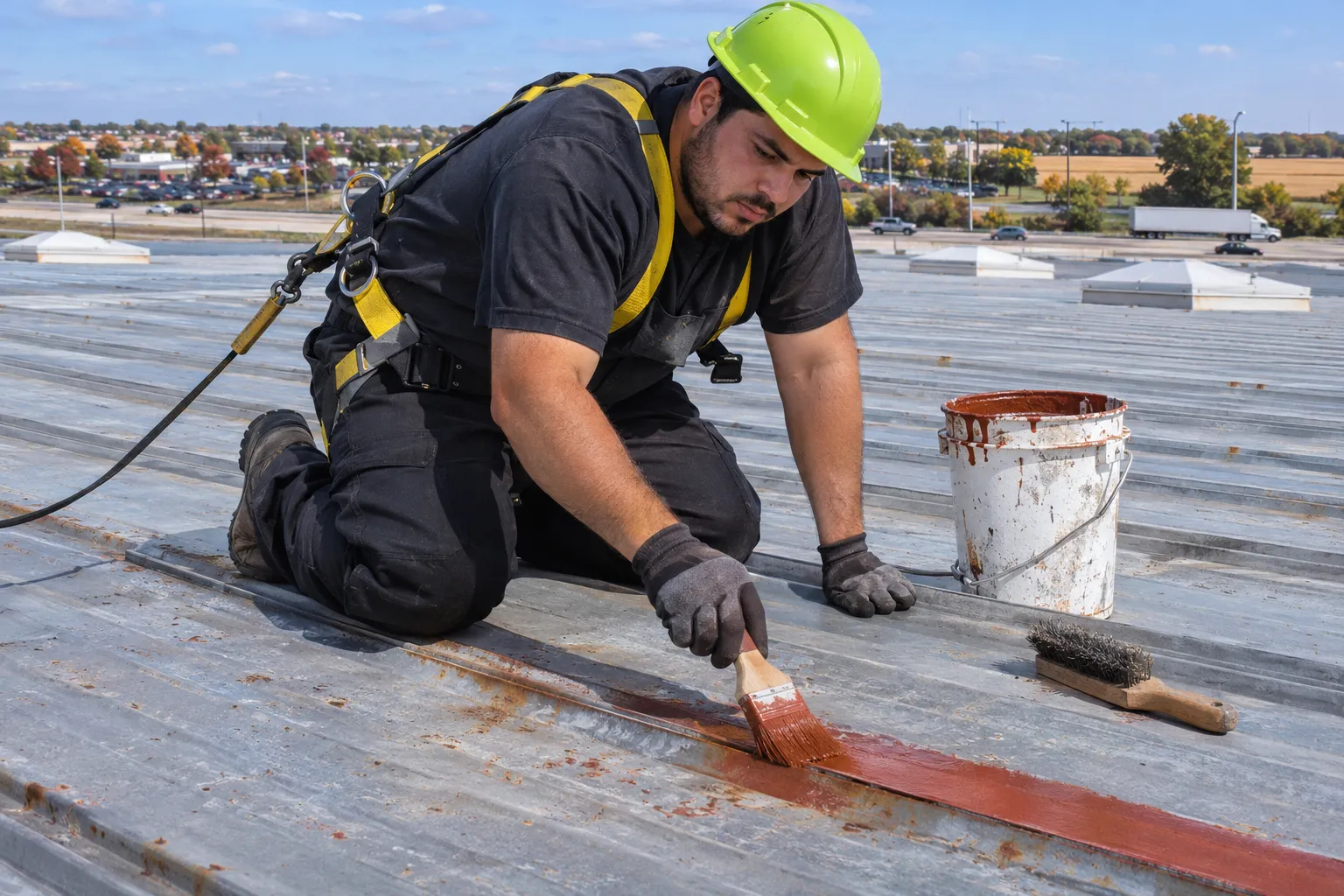
As a Merrillville commercial metal roof coating contractor, we grind and prime the rust, reseal every screw and lap, then coat the steel.
Merrillville commercial metal roof coating works on steel that is still firm. Compare your roof to the two columns, then let the inspection settle it.
| Roof Detail | Ready To Coat | Fix First |
|---|---|---|
| Panel Steel | Surface rust over firm metal | Holes, soft spots, or flaking layers |
| Fasteners | Some loose, most holding | Screws spinning in rotted purlins |
| Side And End Laps | Sealant dry, laps closed | Laps lifted or panels shifted |
| Curbs And Skylights | Flashing intact, edges rusty | Curbs leaking from cracked flashing |
| Insulation | Dry under every probe point | Wet or sagging blanket insulation |
Four conditions show up on nearly every screw-down steel roof we coat. Each one gets fixed before the coating goes on.
Heat
Moisture
Storms
Clogs
Three ways we coat a screw-down steel roof, picked by how the roof drains and how much the building needs from it.
Pitched steel that sheds water quickly takes acrylic in two or more coats, laid over rust primer and sealed fasteners.
Acrylic coating detailsShallow-pitch steel with slow eaves gets silicone, which tolerates short ponding and goes on in fewer, thicker passes.
Silicone coating detailsSteel that leaks in dozens of places and loses heat can take spray foam over the panels, finished with a protective topcoat.
Spray foam detailsWhat a coated steel roof looks like next to the same roof today.
Rust streaks below the fasteners mean the washers have failed. That fix is part of every metal coating job, and it goes faster while the steel around each hole is firm.
Five steps, with the fastener work in the middle where it belongs.
We count loose and stripped screws, mark open laps, probe the insulation for moisture, and photograph each curb. That tally becomes your repair list.
Washing removes chalk, dirt, and loose paint flakes so primer meets clean metal. Runoff is routed to the gutters and downspouts, away from doors and docks.
Grinders and wire wheels take rust down to bright or firmly rusted steel. A rust-inhibiting primer goes on those spots before any moisture returns.
Oversized screws with new washers go in where the old ones failed. Heads get sealant or reinforced patches, and laps get seam tape or mastic.
Base and top coats go on to the mil thickness the product sheet lists, checked with a wet-film gauge across the field and at every lap.
If part of the building needs a different system, these four cover the rest.
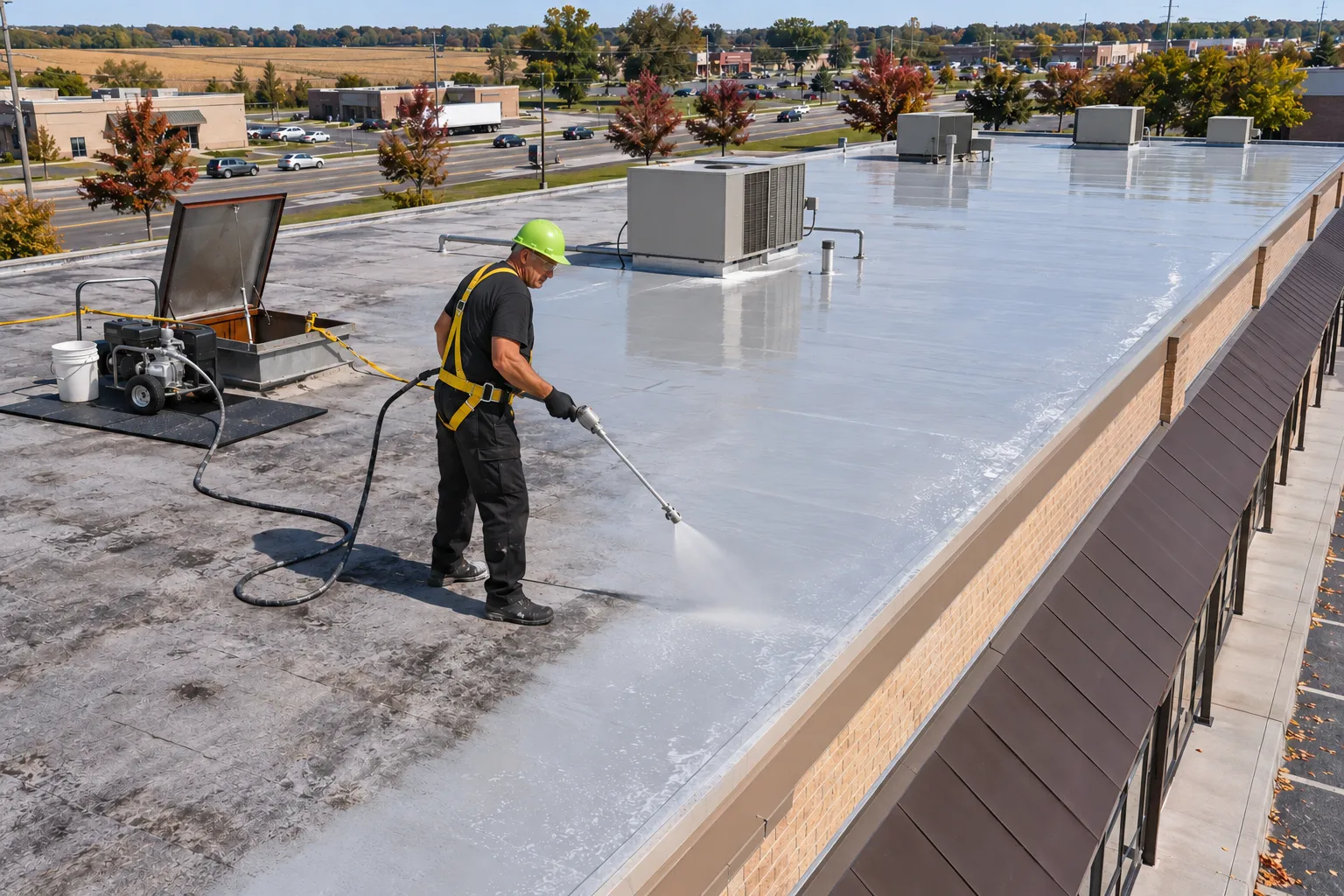
Flat or slow-draining sections next to the steel get silicone, which tolerates water that lingers after rain.
Silicone Roof Coating in Merrillville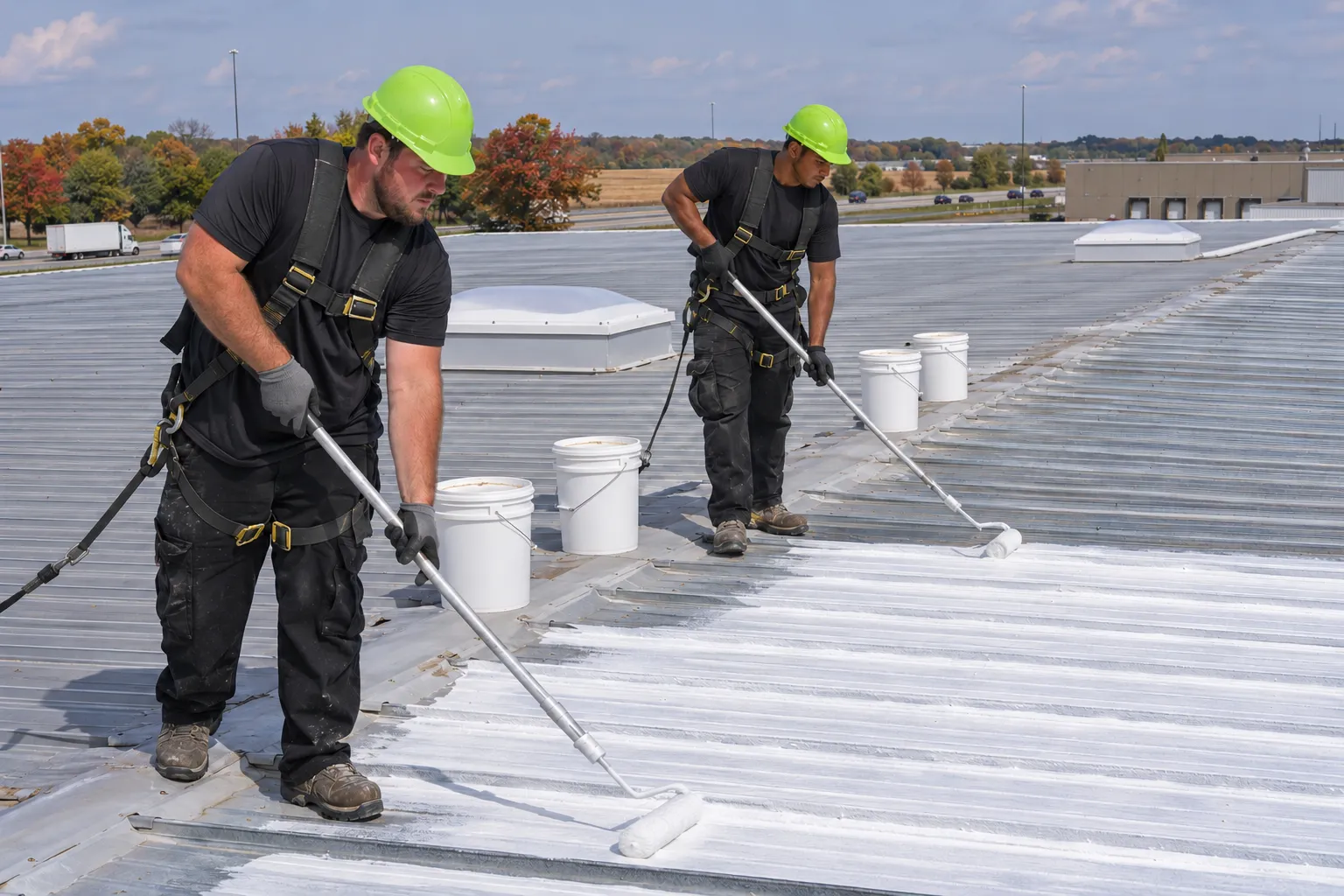
Steep, fast-draining panels take acrylic, a water-based coat that is simple to renew down the road.
Acrylic Roof Coating in Merrillville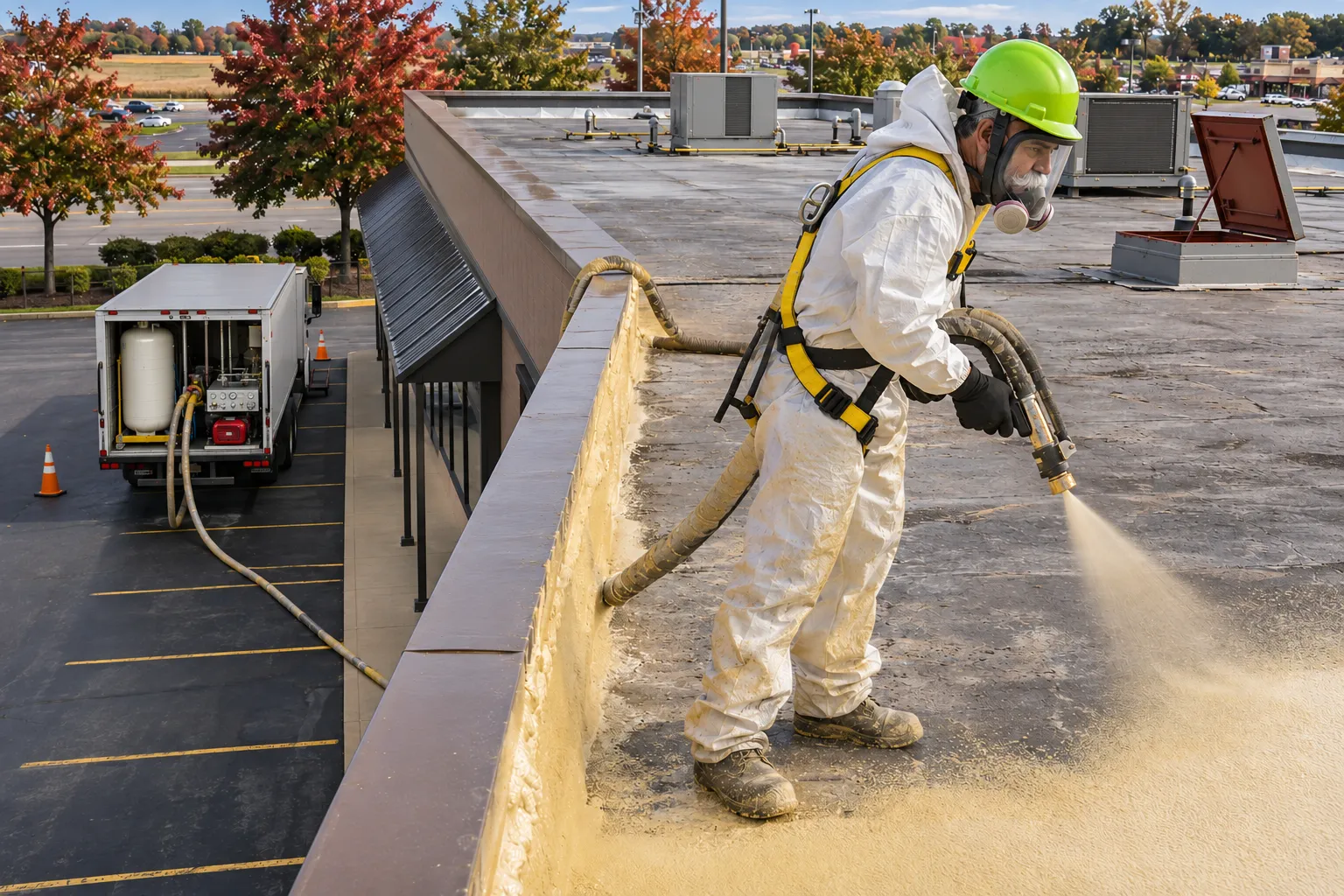
Buildings that need insulation added on top get spray foam first, then a protective coating over it.
Spray Foam Roofing in Merrillville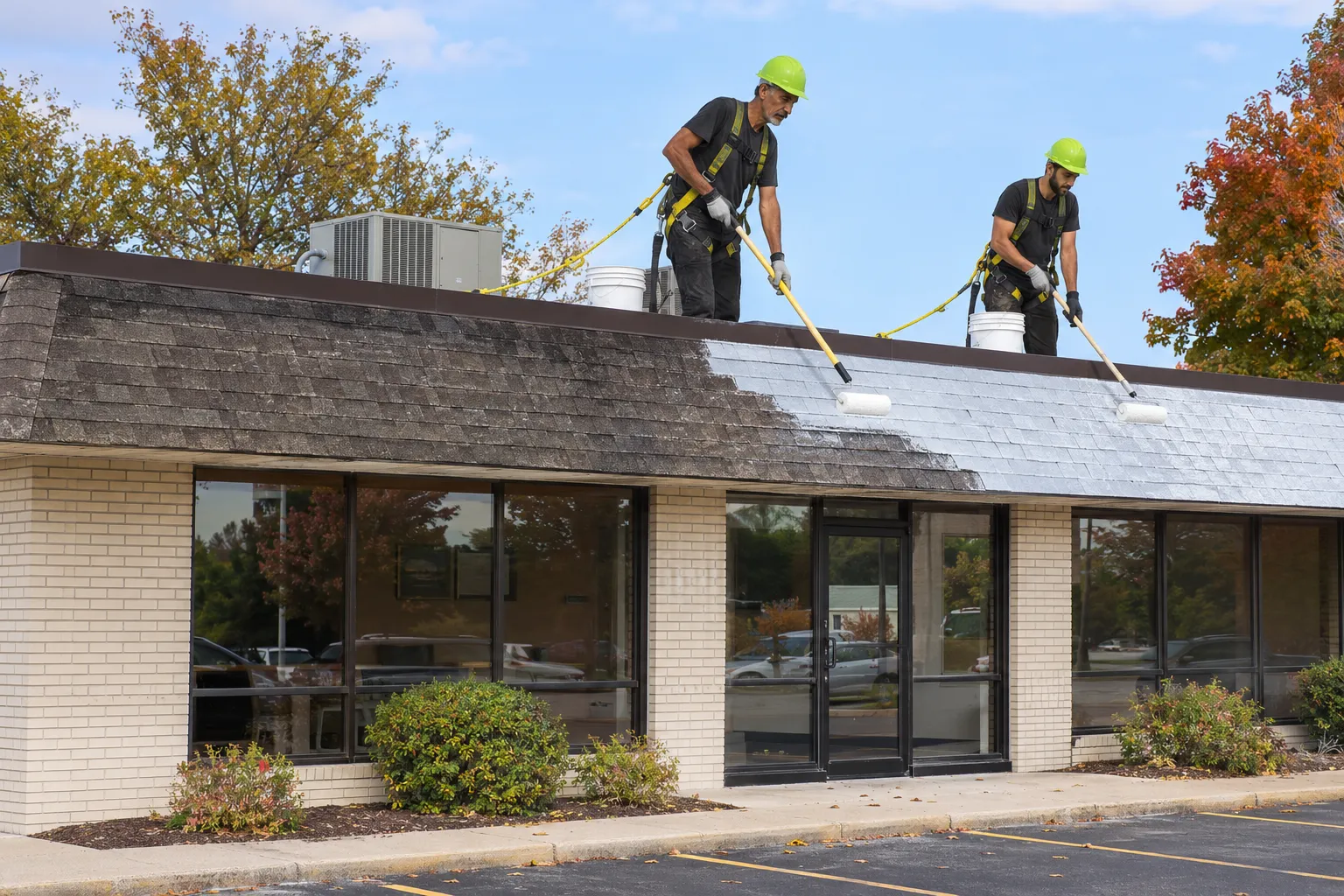
Office wings roofed with asphalt shingles take a coating made specifically for shingles.
Shingle Roof Coating in MerrillvilleAnswers about hail, fasteners, rust, cost, and weather on screw-down steel roofs.
Yes, once the storm damage is repaired. Punctured panels, split seams, and crushed washers are fixed first, and cosmetic dents get coated over. If an insurance claim is open, we photograph the damage before touching anything, so the adjuster sees the roof as the storm left it.
Fastener work is the heart of the job. Every screw is checked, failed ones are replaced with oversized fasteners and new washers, and each head is sealed or patched with reinforced fabric. Side laps and end laps get seam tape or mastic before the coating covers everything.
Washing comes first, then grinding or wire-brushing loose rust down to firm metal. A rust-inhibiting primer covers every treated area so rust stops spreading under the coating. Panel ends and laps get the most attention, since water sits longest there.
Expect roughly $2.50 to $4.00 per square foot for coating, compared with about $5 to $8 per square foot to replace the panels. The inspection sets your number. Rust volume, how many screws and laps need sealing, primer, coating thickness, and access are what move it.
Coating seals leaks over exam rooms and offices with the roof left in place, so patients and staff below see little disruption. Noisy steps such as screw replacement and washing are timed around office hours, and a light-colored coat keeps the roof surface cooler in summer.
Freeze and thaw cycles go after water that gets under coating edges or into open seams. With laps and screws sealed and the coating well attached, most water stays out. A spring check of seams, fasteners, and penetrations catches any lifted spots so they are resealed before winter.
Get a ballpark range for your steel roof, or call to set up the roof walk.