Rain
Ponding Over Low Seams
- You See
- Rings of dirt where water sat after the last storm.
- What It Means
- Seams in low spots spend more time wet than dry. They get reinforced fabric and an extra pass of silicone before the field coat.

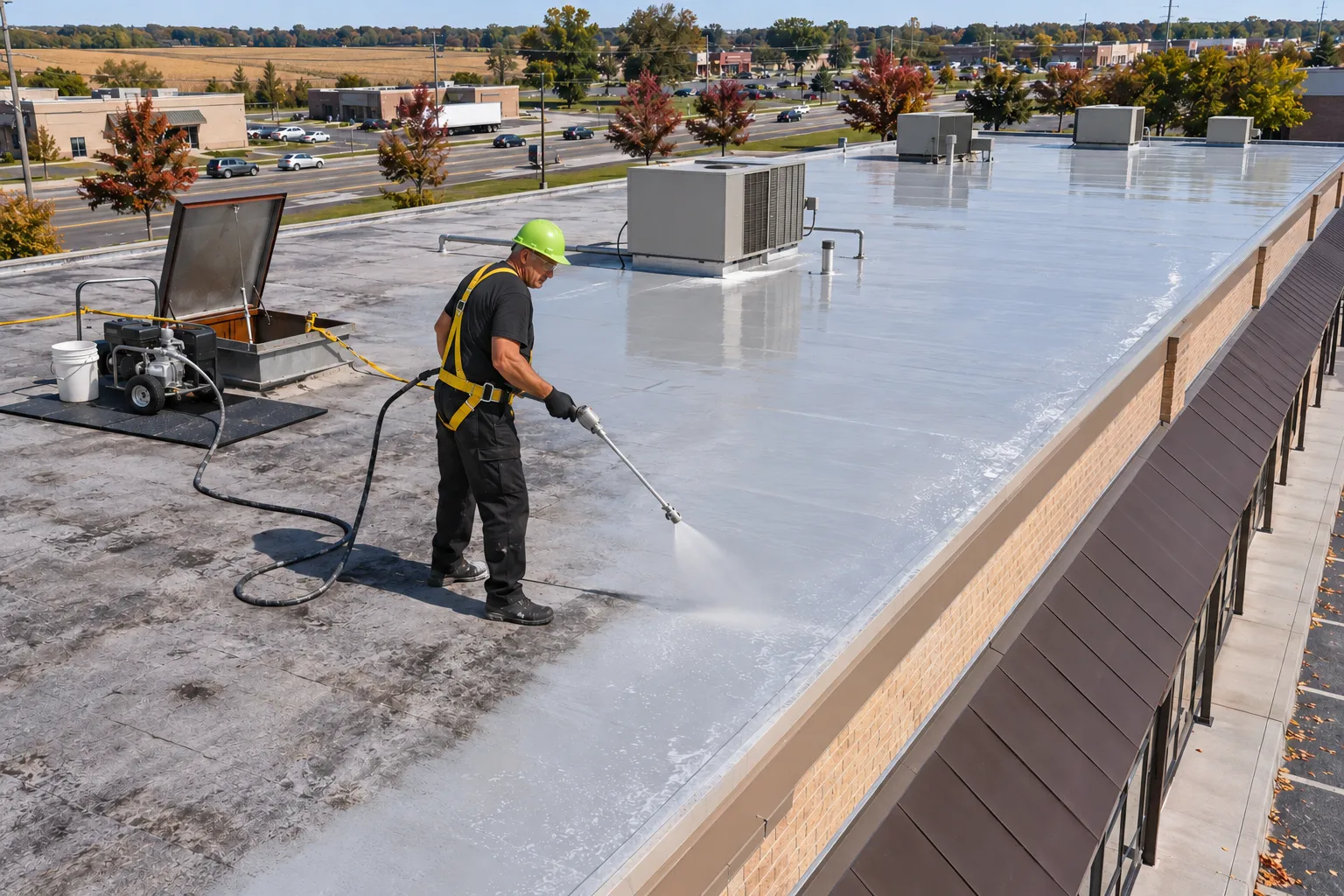
As a Merrillville silicone roof coating contractor, we clean and prime low-slope roofs, seal every seam, and spray silicone where water tends to sit.
Merrillville silicone roof coating goes on roofs with low slope and slow drainage. Check the columns against what you see after the next rain.
| Roof Detail | Fits Silicone | Sort Out First |
|---|---|---|
| Slope | Flat or low-slope sections | Steep panels that drain fast |
| Ponding | Water gone within two days | Water standing for a week or more |
| Existing Surface | Old silicone or firm factory finish | Peeling acrylic or loose granules |
| Seams | Tight, ready for a detail coat | Split seams or open laps |
| Insulation | Dry everywhere probed | Soft, wet sections under the deck |
Silicone covers a lot of roof trouble well, yet these four conditions have to be handled before it goes on.
Rain
UV
Equipment
Leaks
Silicone is one of three answers for a slow-draining roof. Here is how it lines up with the other two we use.
Low-slope metal, built-up, and older coated roofs that are firm and dry take silicone directly after cleaning and primer.
Roofs that need insulation or build-up at low spots get spray foam first, then silicone as the protective coat.
Spray foam roofingSteeper sections that drain quickly can take acrylic instead, joined to the silicone area at a reinforced seam.
Acrylic roof coatingThe low-slope roof today and after silicone, item by item.
Lasting ponding is the clearest sign silicone fits the roof. Tell us where the water collects, and the roof walk starts there.
Silicone work follows these five steps, with the weather checked before each spray day.
Each low spot, seam, and curb gets checked, and the field is probed for wet insulation. Ponding areas are measured and marked on a roof sketch.
Pressure washing lifts dirt, chalk, and biological growth. Silicone grips poorly on dust, so the roof is fully dry and clean before priming.
Clogged drains and scuppers are cleared and broken strainers replaced, so water leaves the roof as fast as the slope allows.
Seams, curbs, and penetrations take a reinforced detail coat, with fabric embedded in silicone, ahead of the field pass.
Silicone goes on in one or two passes to the mil thickness the product requires, checked with a wet-film gauge as the spray moves.
Buildings often need silicone on one section and another system elsewhere.
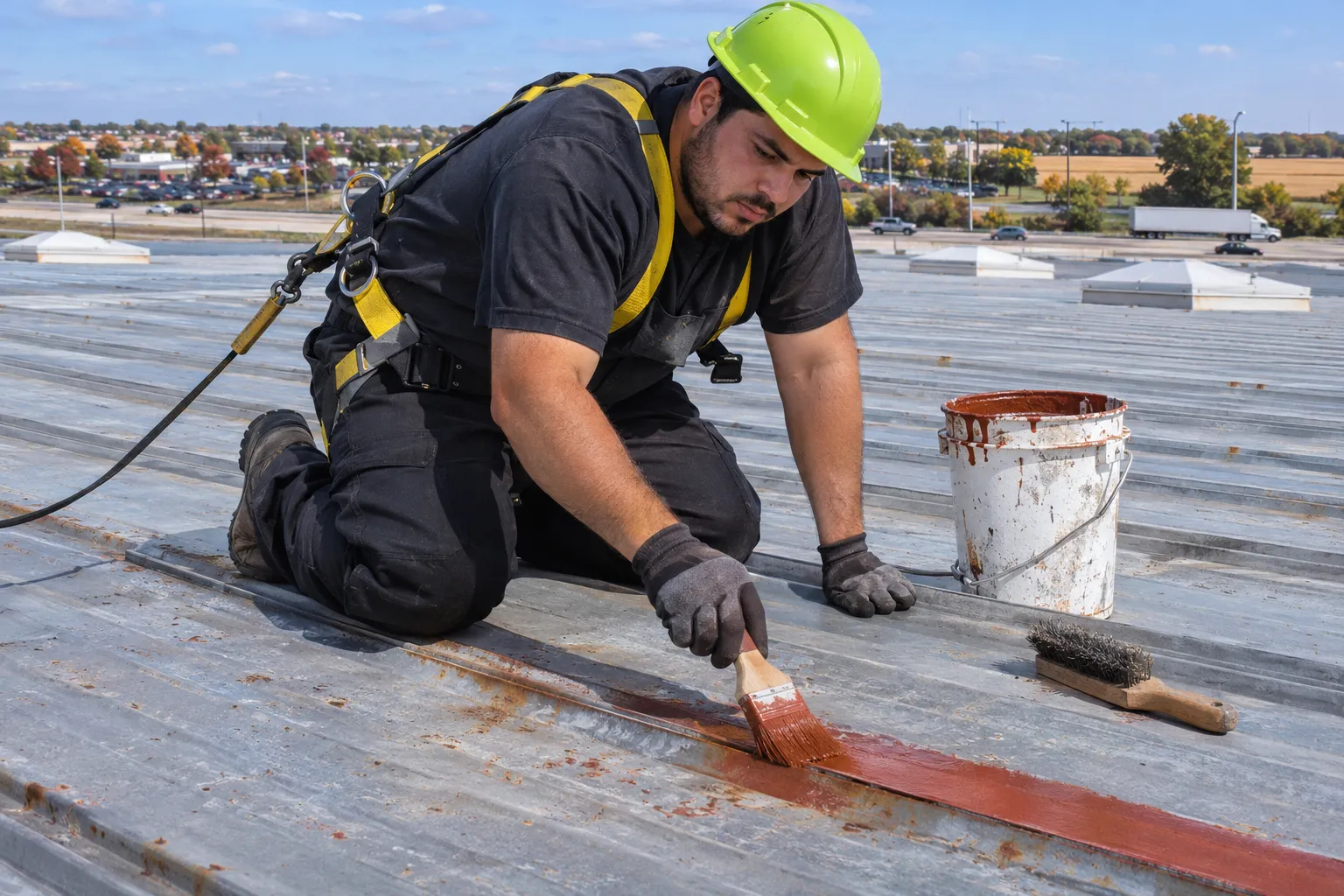
Screw-down steel over the warehouse side gets rust and fastener work, then a coating of its own.
Commercial Metal Roof Coating in Merrillville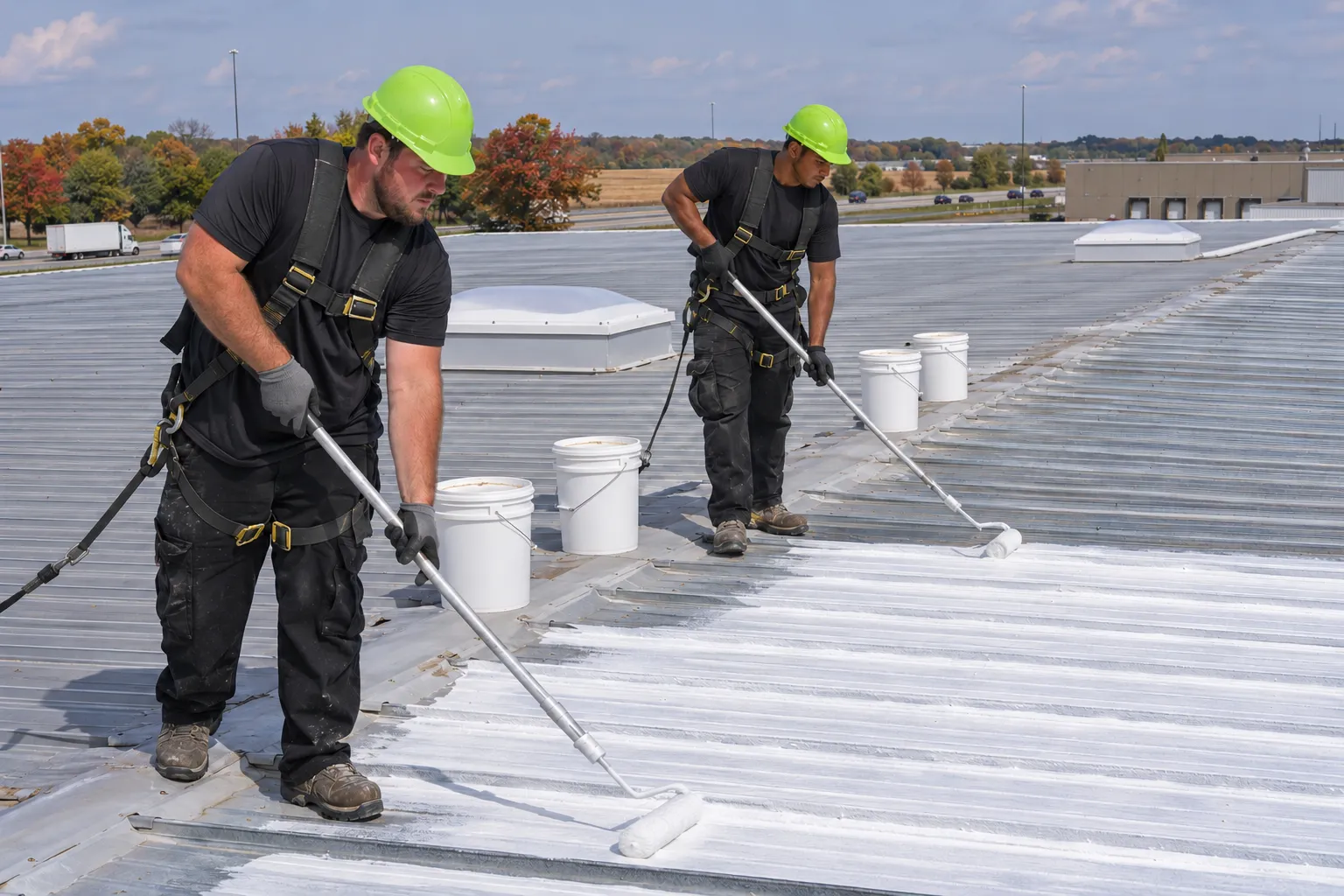
Pitched metal over offices that sheds water quickly fits a water-based acrylic coat instead.
Acrylic Roof Coating in Merrillville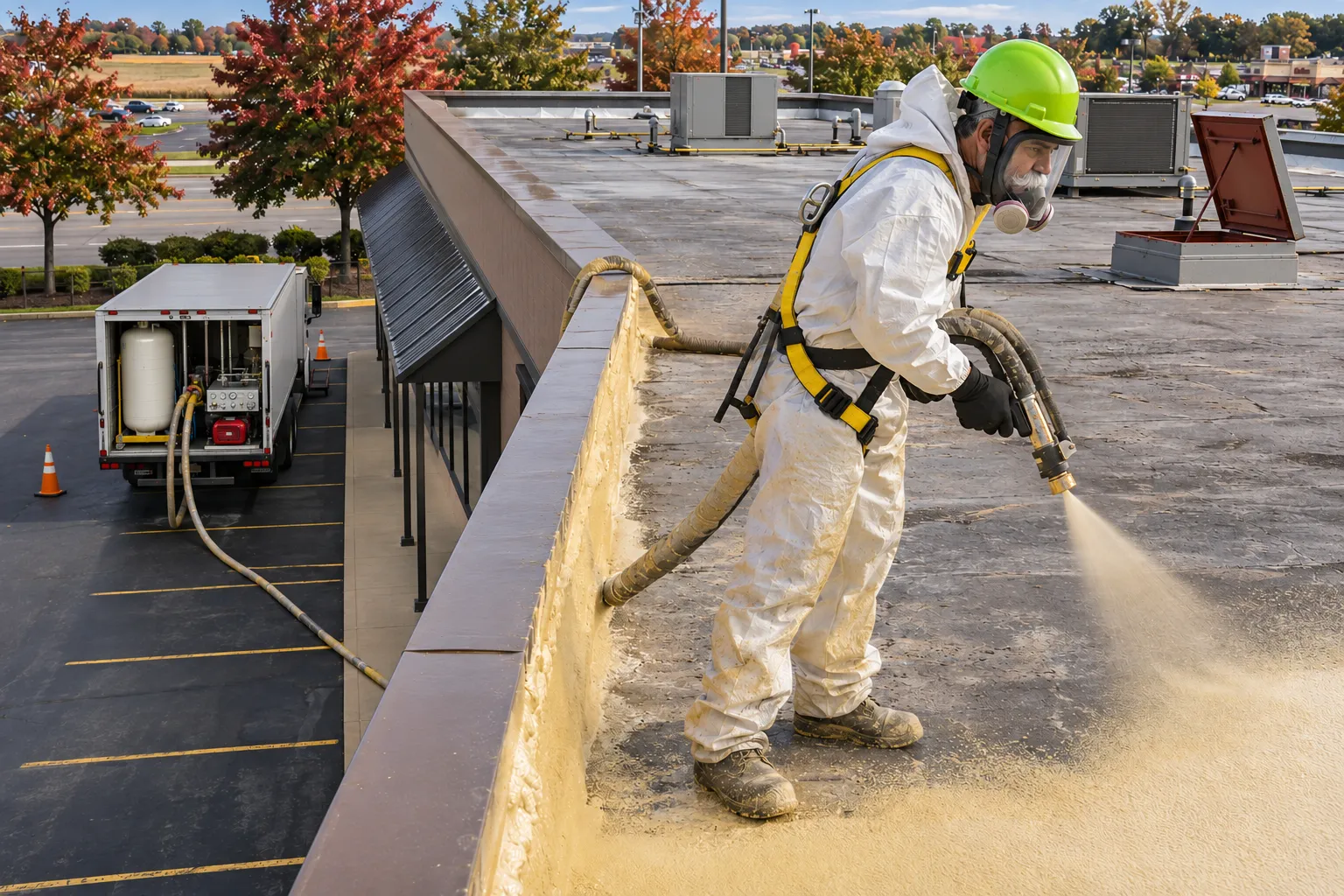
Low areas that need building up and added insulation can take foam beneath the silicone.
Spray Foam Roofing in Merrillville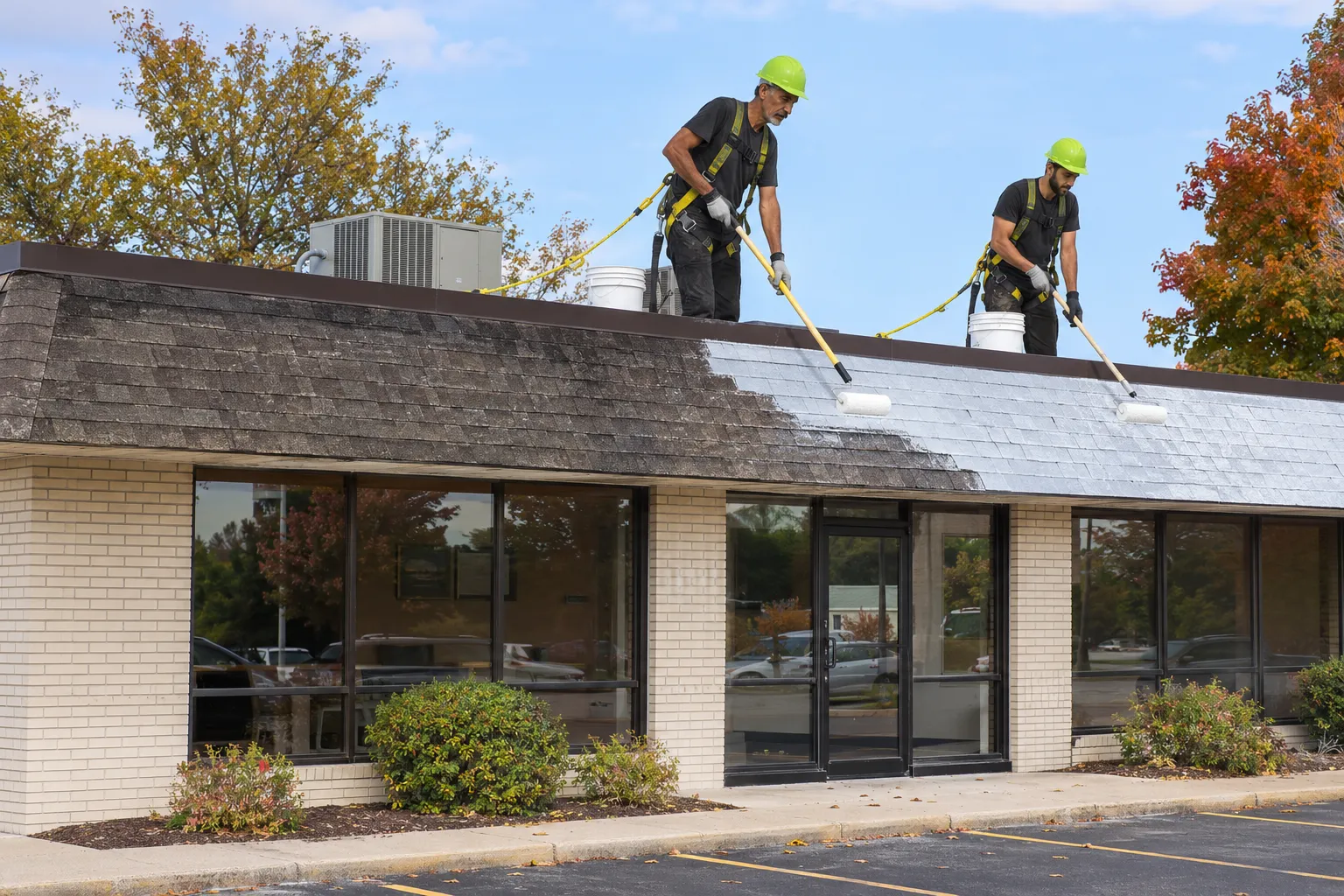
Shingle-roofed wings of the building get an asphalt-rated coating in place of silicone.
Shingle Roof Coating in MerrillvilleCold weather, coats, drawbacks, cost, and summer heat, answered for low-slope roofs.
Silicone handles cooler days better than acrylic, but the roof still has to be clean, dry, and free of frost or dew. Late fall afternoons often work once the surface dries. If moisture is likely to form before the silicone skins over, we wait for a better day.
One or two coats is usual, set by the target thickness in mils and the product. Seams and fasteners get a reinforced detail coat first. Wet thickness is measured during application so the finished film meets the maker's number across the whole roof.
Dirt sticks to silicone and dulls its reflectivity over time, and the surface turns slick when wet, so roof access takes care. Only silicone sticks well to silicone, which narrows your recoat choices later. The softer surface also benefits from walkway pads along routes to rooftop units.
Silicone sits within the published coating range of about $2.50 to $4.00 per square foot, against roughly $5 to $8 per square foot for replacement. Required thickness, the number of seams and fasteners to detail, primer, and how much ponding the roof has decide where your number lands.
Heat makes seams and fasteners expand and contract, and silicone stays flexible through it while resisting UV breakdown. The white finish runs cooler than bare metal. Spray days are picked so the surface temperature stays inside product limits, often in the morning, with an eye on afternoon storms.
Recoating mostly means washing the old film, repairing any cut or torn spots, and spraying a fresh pass at full thickness. New silicone grips old silicone that is still attached, so the earlier work stays in place as the base.
Tell us where the water sits, or run the ballpark estimate for your roof size.